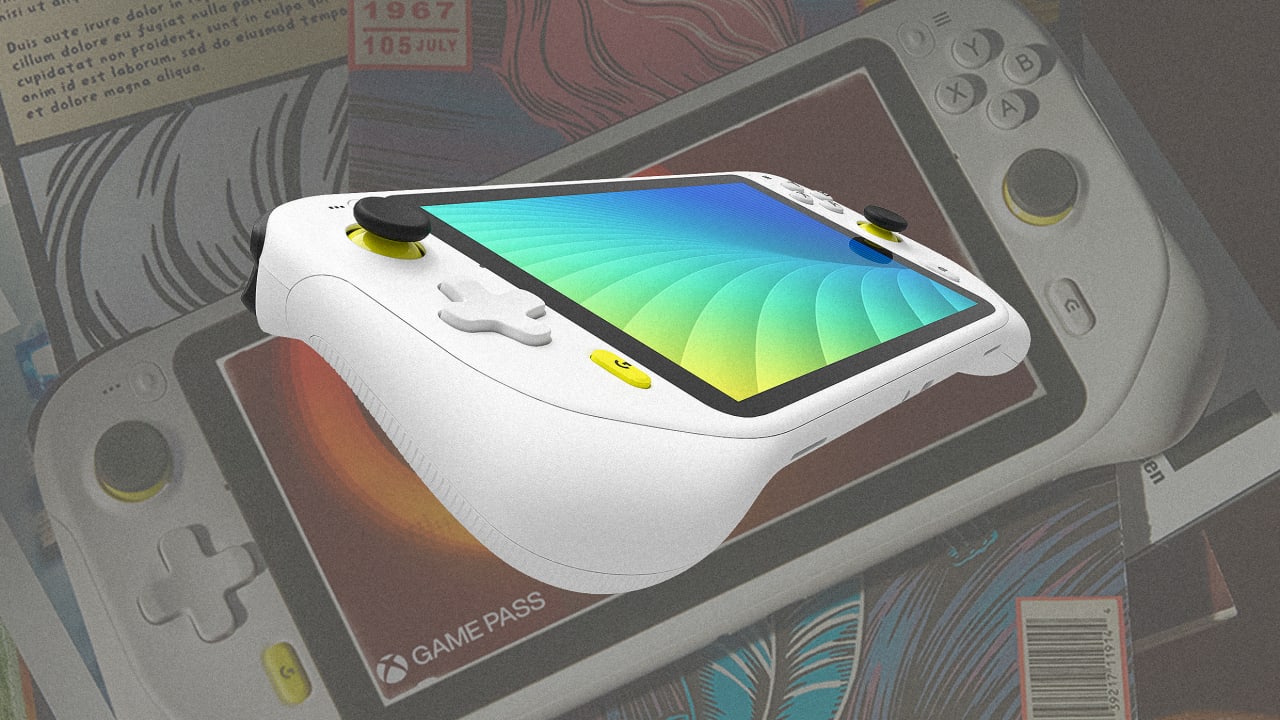
Logitech, the $5 billion company best known for its everyday keyboards and mice, has a bold new product that is far removed from its standard computer peripherals. Today, the company is announcing the G Cloud, a handheld gaming device made specifically for playing cloud-based video games. The device will cost $349 and will ship in October.
According to one analysis, the global portable gaming device market was $32 billion in 2020, and is expected to exceed $50 billion by 2027, with established players such as Nintendo and Xbox driving growth. Logitech’s Ujesh Desai, who led the development of the G Cloud, says gaming is about to experience its Netflix moment, where cloud-based games are instantly accessible via a platform subscription, no expensive game console or cartridges required. “The infrastructure is there,” he says. Logitech hopes to capitalize on the momentum.
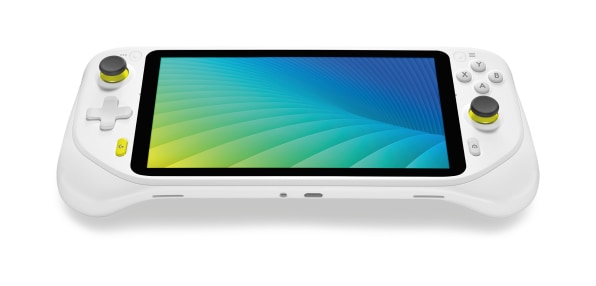
To that end, the G Cloud has a simple form factor, with a white plastic body, more than a dozen buttons and controls, and a 7-inch multi-touch screen. Designed to play comfortably for extended periods and for hands of different sizes, the device is lighter than others on the market and less bogged down by internal hardware. For the game equivalent of browsing and binging on Netflix, the G Cloud tries to make launching and playing a game as easy as possible. “We support the Microsofts, the Googles, the Apples of the world. We respect where their strengths lie and our job is to fill in areas we think we can add more value to,” says Desai. Specifically for its partnership with Microsoft, Logitech is designing the G Cloud as a natural complement to the Xbox Game Pass subscription service.
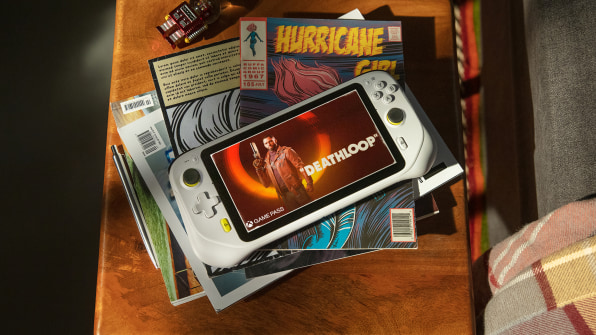
Logitech is already familiar to gamers for Logitech G, the video game-focused product line, which includes headsets, controllers, genre-specific devices such as steering wheels for racing games, and heavy equipment controls for farm simulator games. G Cloud is the first standalone device and the first with a screen.
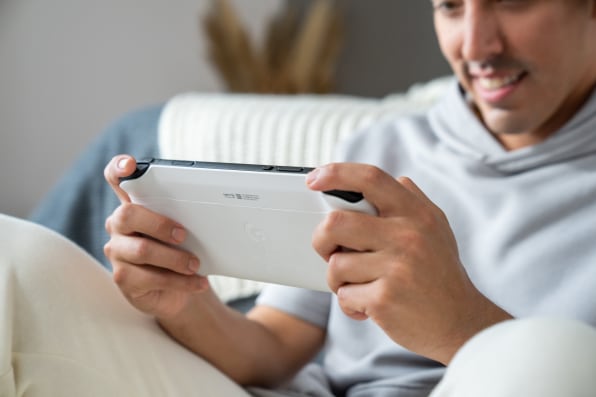
Logitech isn’t the only company entering the rapidly evolving handheld gaming space. With a growing number of games accessible on mobile phones and through device-specific subscription services, handheld gaming has made great strides from the 8-bit Nintendo Game Boy of the 1990s. Nintendo’s latest handheld, the Switch, has its own subscription service, and Nvidia’s GeForce NOW service makes PC games accessible on a wide variety of devices a player has in their home or pocket. There’s also a range of add-on equipment that can turn a regular smartphone into a customizable, if slightly clunky, gaming device. And Steam Deck is a new handheld device that is arguably the closest direct competitor to Logitech’s G Cloud, with the ability to stream PC games with subscription service, as well as games stored internally.
Logitech hopes consumers see its new device as a more accessible version of those alternatives. Focusing specifically on cloud-based gaming, the G Cloud is smaller and lighter than the Steam Deck, and easier to use than the add-on gear made to turn smartphones into gaming devices.
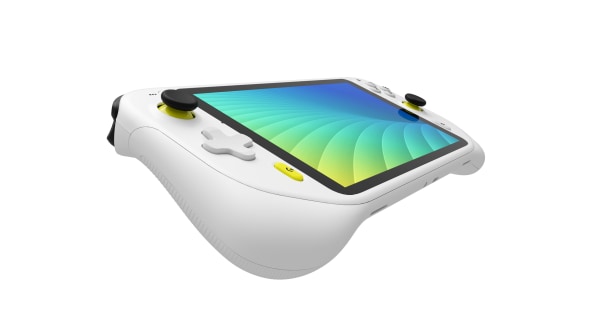
“We said very early on that this is a handheld for cloud gaming,” says Desai. “And it may not seem like a big deal, but anchoring ourselves first and foremost that this is a cloud handheld has really informed a lot of the design decisions we’ve made.”
Without the need for heavy internal central and graphics processing units and the fans they require, the G Cloud has a slim profile that makes it easier to fit in hands of different sizes. The designers paid special attention to the long-lasting feel and weight of the device, as some gamers are likely to use it for hours on end. This focus and the lighter hardware requirements make the G Cloud a particularly light gaming handheld, weighing in at 463 grams or about 1 pound. In comparison, the Steam Deck weighs 669 grams, about half a pound heavier.

Ingve Holmung, chief of design at Logitech, says the concept behind the device was ‘defined softness’, with an emphasis on ergonomic comfort, simplicity and accessibility. “When you go into a new space, you don’t necessarily want to write down the things you do everywhere else,” Holmung says. “We really tried to create something new that felt like a Logitech G product. But it’s a handheld device with a screen. It’s very different from the other things we do.”
With its mostly white casing, the G Cloud looks a little different from most tech-forward and gadget-proud video game hardware on the market, including those made by Logitech itself. “We didn’t want this to be just another black lump of plastic,” says Holmung.
Desai says the decision between the established gaming aesthetic and the softer approach was like a fork in the road for the design team. “We stayed in the middle of that split for a while. We really discussed it a lot,” he says.
In the end, the team opted for a design that felt more open and less restricted to the hardcore gamer segment of the market. Desai, a gamer herself, says the design is meant to appeal to gamers and non-gamers alike.
“What we think the future that people like Microsoft and Nvidia are trying to envision is that they want to make these game subscriptions accessible to everyone,” Desai says. A simple handheld device, with Netflix-esque simplicity, could be a way for these cloud-based gaming services to reach more people. “We think this is just a new way to play,” Desai says.
0 Comments