
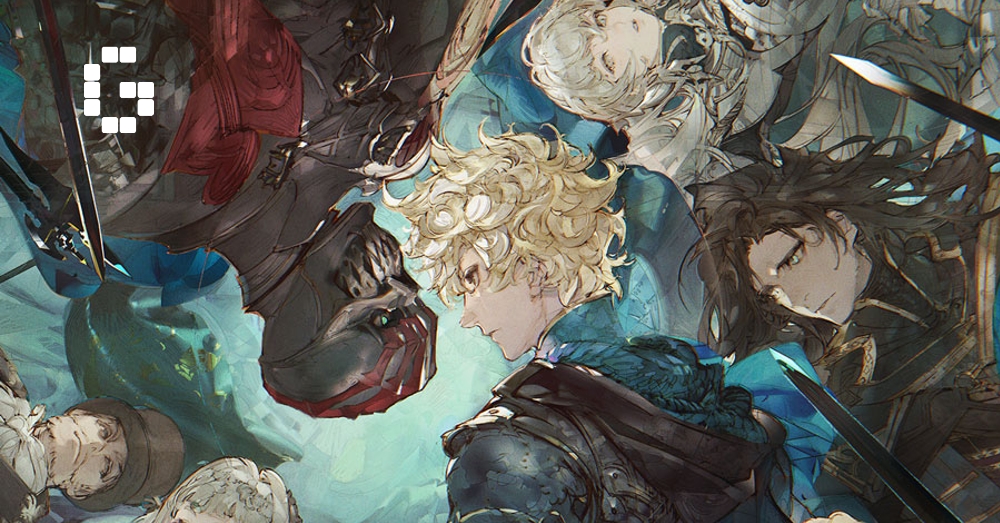
Square Enix’s latest RPG, The DioField Chronicle, seems to be adding its own unique flair to the JRPG scene with a blend of real-time strategy gameplay with traditional RPG mechanics and we were able to speak to three developers via email interview.
These were the Producer of Square Enix Shigeyuki HirataArt Director of Square Enix Takahiro Kumagaiand developer Lancarse’s development director and combat designer, Hirofumi Fukuic who told us more about the game’s development and inspiration from MOBAs and MMO games.

Takahiro Kumagai

Shigeyuki Hirata

Hirofumi Fukuic
Shigeyuki Hirata previously worked as a producer for Lord of Vermillion IV before joining Square Enix in 2016. Takahiro Kumagai worked on the backgrounds of Legend of Dragoon, Kingdom Hearts and Final Fantasy: The Crystal Chronicles before acting as director and art director of Figure Heads. Hirofumi Fukuic worked as a combat designer for Disgaea 4 and Mobile Suit Gundam EXTREME US POWER.
The three of them certainly know their way around RPGs and what can be done to innovate and move the genre forward. In the interview, they made it clear that this is exactly what they wanted to do with The DioField Chronicle. Unlike many Japanese strategy RPGs, the characters in The DioField Chronicle are controlled in real time using elements from Japanese RPGs and Western MOBA games. Here’s what they had to say:
We noticed that DioField is more of a real-time strategy RPG rather than a grid-based system like Final Fantasy Tactics for example. Can you tell us more about the decision to use this kind of combat system and its advantages?

Hirata: Since many orthodox strategy RPGs have been released already, I’ve always been looking for a chance to try something new within the genre.
The impetus for the launch of this new project was the idea that we could create an entirely new strategy RPG by combining the real-time elements of MMO or MOBA games with a more classic RPG game system.
The biggest advantage of this combat system would be that the real-time fighting allows the player to feel the thrill of spontaneous action. At the same time, the player also has the option to stop the real-time element if he wants more time to think about his next move. This ensures that the strategic elements inherent in the RPG genre are preserved.
With that, I believe we’ve achieved a perfect balance between these two genres, creating a completely unique game.
You mentioned earlier that The DioField Chronicle is not only inspired by older RPGs like Ogre Battle, but also western games like League of Legends and Diablo. Can you tell us more about how these titles, or other games, inspired DioField Chronicle?

Hirata: As for the controls and the linear movement of characters across the game field, MOBA titles like League of Legends and RPG titles like Final Fantasy XII have been our inspirations.
Because we wanted to reproduce the use of skills in strategic RPGs and make sure that using Magilumic Orbs gave the players a really exciting experience, we took more inspiration from Final Fantasy Tactics and Fire Emblem for this mechanic.
We were really excited to be able to summon Bahamut as early in the demo as one of the special Magilumic Orb attacks. Can you tell us more about the Magilumic orbs and will we see more classic subpoenas appearing through them?
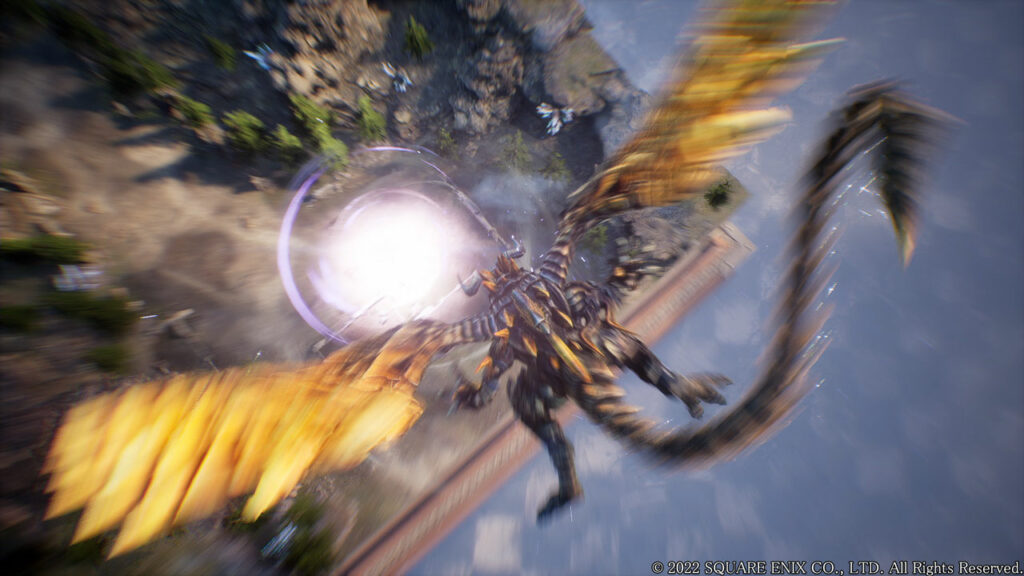
Hirata: The characters that can be summoned with the Magilumic Orbs are based on those from Lord of Vermillion, a title I worked on as a producer. Therefore, fans can expect to see several other characters with connections to Lord of Vermillion appear as magical beasts or as Magilumic Orb summons.
We heard that Game of Thrones composers Ramin Djawadi and Brandon Campbell scored the soundtrack for the game. Can you tell us more about what it was like working with them?

Hirata: As a big fan of Game of Thrones, I felt that they were really the only composers who could make music that would also fit the mood and themes of this title. That’s why I approached them myself!
Although we mainly corresponded via email, they quickly understood the mood of the title and that made the whole process smooth. The unique features of their musical compositions are also evident in the game’s scores.
With this game, Triangle Strategy and Tactics Ogre: Reborn all coming out this year, do you think the Strategy RPG genre has regained popularity recently?

Hirata: I have always believed that the genre had enormous untapped potential, and it has now been realized in recent times. As a genre with universal appeal, it has now been adapted and expanded in many different ways.
fukui: Recent advances in video game development have enabled us to do so much more than we’ve ever been able to do and also allowed us to rethink traditional genres with an entirely new approach. I feel like the revival of the strategy RPG genre is simply a natural consequence of these revolutionary advances in video game development techniques.

Mr. Fukui is certainly not wrong with that last statement. As video games become more sophisticated, it is common for developers to find new inspirations that allow their games to shape new unique mechanics.
The DioField Chronicle was certainly a pleasant surprise when I got my hands on the demo. When I came out so shortly after Square Enix’s last SRPG Triangle strategy, I found it refreshing how different it was from anything I’ve played before. The gameplay reminded me a lot of Warcraft or even Xenoblade with its MMO style car combat, but still with a distinct touch of traditional JRPG mechanics.
When I heard that it was so heavily inspired by western games, I became even more curious. It’s interesting to see developers being inspired by games from other cultures and adapting them to their own work. I really wanted to try more.
we are mr. Hirata, mr. Fukui and Mr. Kumagai grateful for answering our interview questions, and wish them the best of luck as The DioField Chronicle unfolds soon.
The DioField Chronicle launches on Nintendo Switch, PS5, PS4, Xbox One, Xbox Series X|S, and PC.
0 Comments