
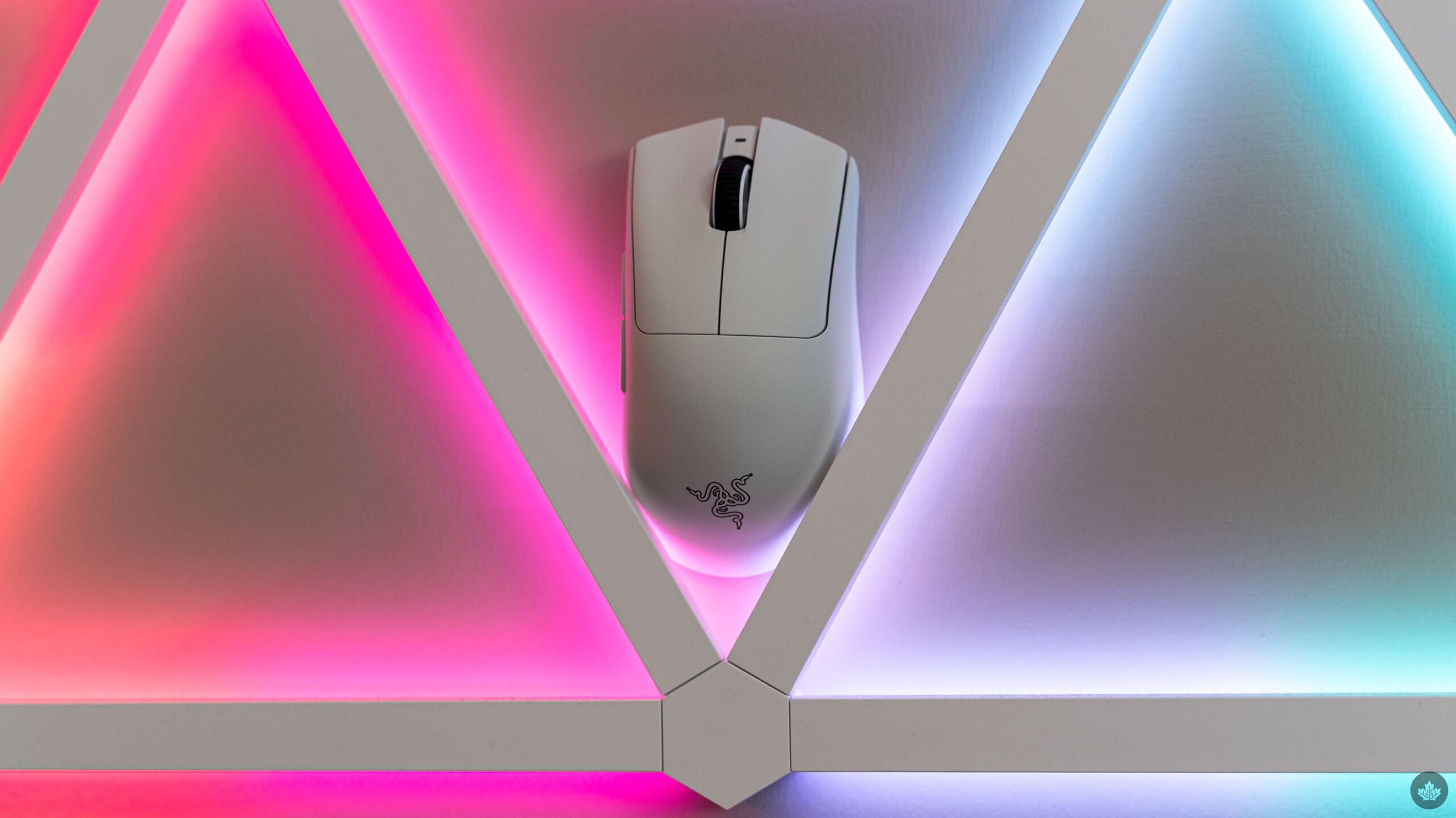
Razer released its latest mouse on August 11, a revamp of the popular DeathAdder. I’ve had a chance to try the DeathAdder V3 Pro for a few days and so far I’m impressed.
Let’s take a look at what’s new with the DeathAdder V3 Pro first, then dive into my experience with the mouse. Razer says the DeathAdder V3 Pro has its “HyperPolling” technology and a “new, ultra-light ergonomic design” to improve gaming performance.
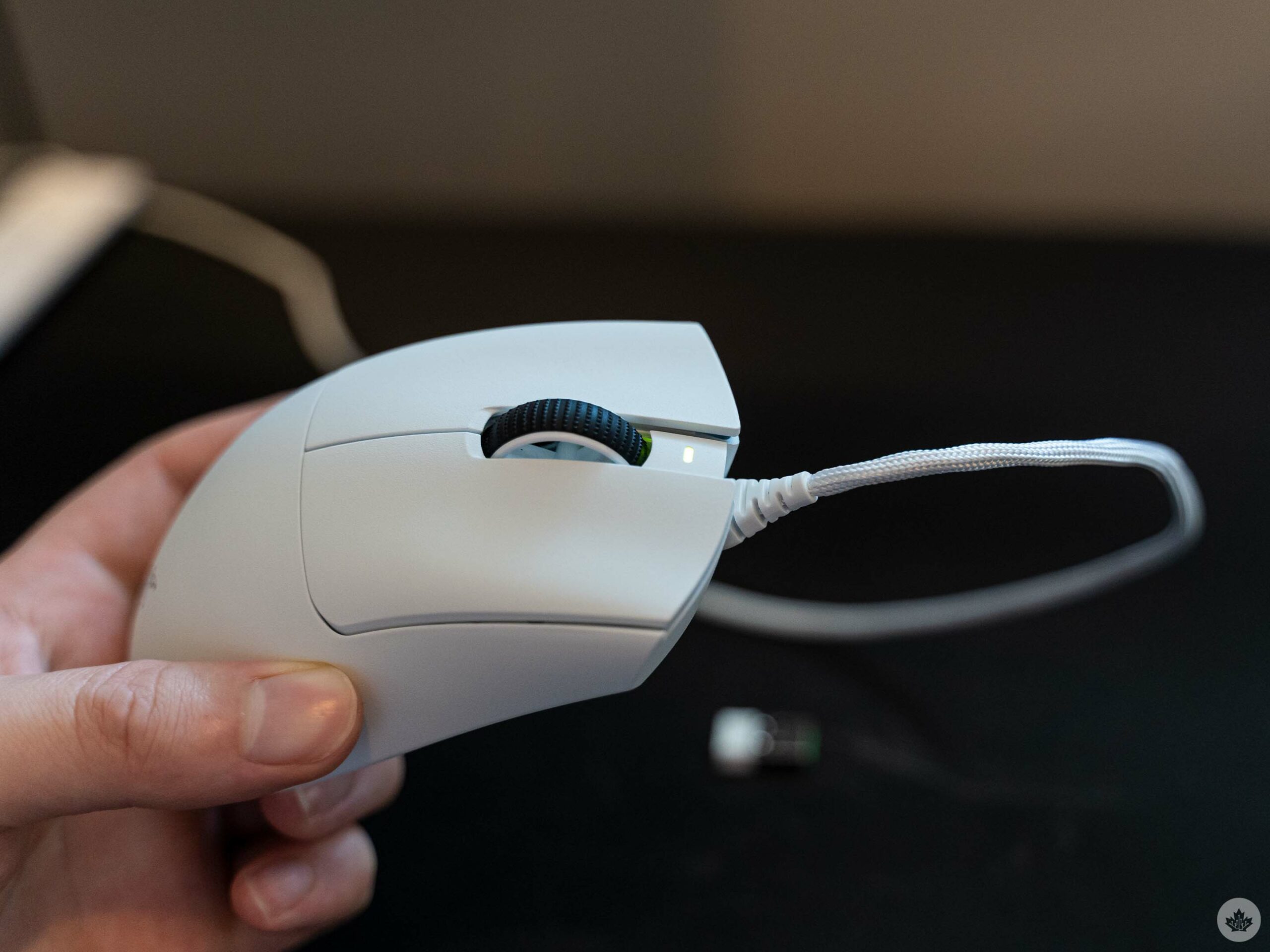
Make no mistake, the DeathAdder V3 Pro is truly a gaming mouse, although the astute among you may notice that it lacks that classic gamer RGB glow. Yes, surprisingly there isn’t a single flashy LED on the DeathAdder (the only LED is a functional one: the status indicator). While some may be disappointed in the lack of RGB, I appreciated the more toned down aesthetic. I mostly work from home, but it’s nice to know that if I used this in the office, it would probably fly under the radar like a normal wireless mouse.
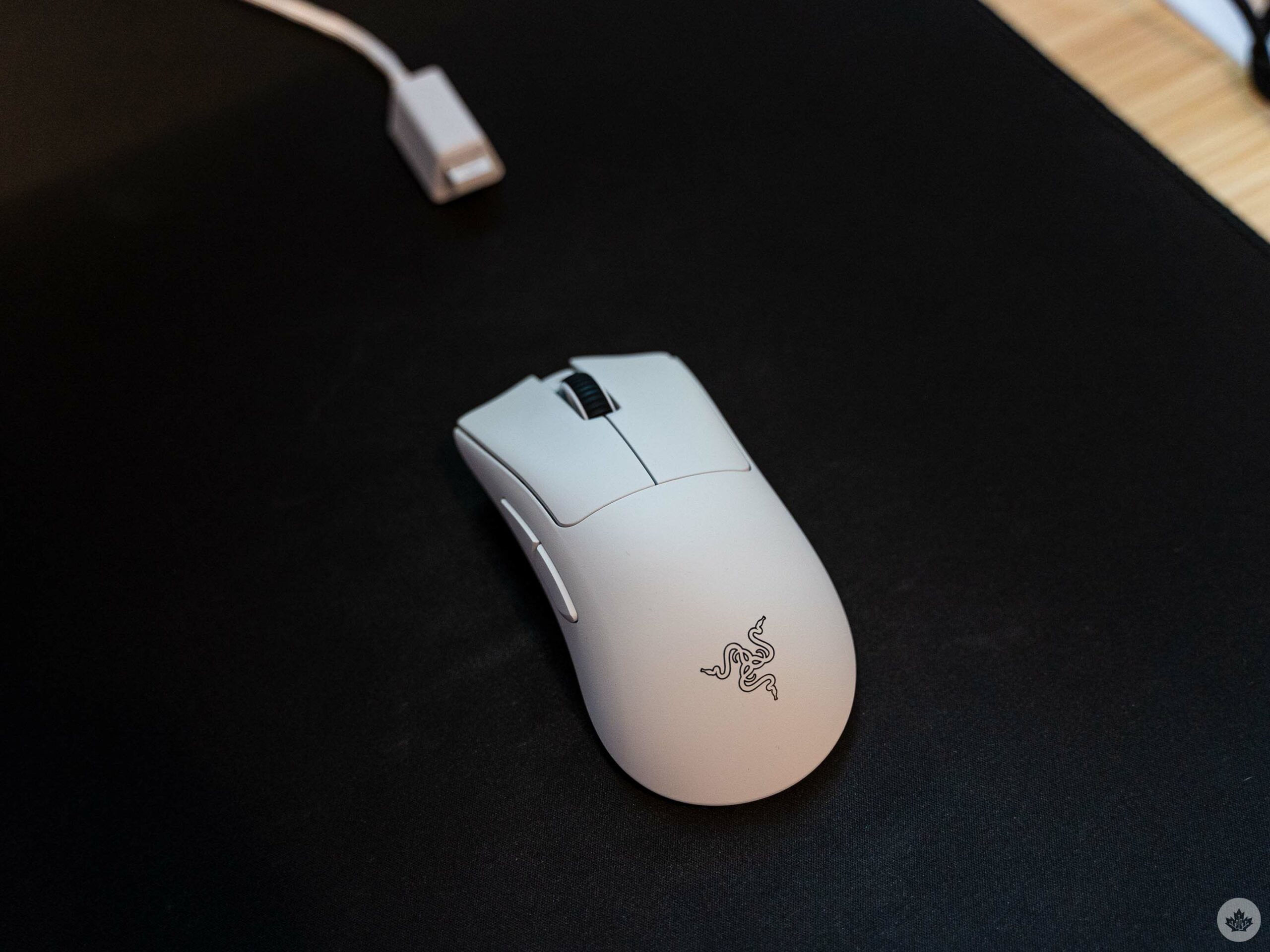
The mouse is now also available in black and white (weighing 63g and 64g respectively) and is about 25 percent lighter than the previous DeathAdders. It also has a battery life of up to 90 hours and comes with what Razer calls a ‘Speedflex’ charging cable (it’s really just a USB-A to USB-C cable with a light, flexible material that works great when plugged in on the mouse). That means you can easily use the DeathAdder V3 Pro wirelessly or wired, or just plug it in whenever you want to charge it without having to stop your gaming session.
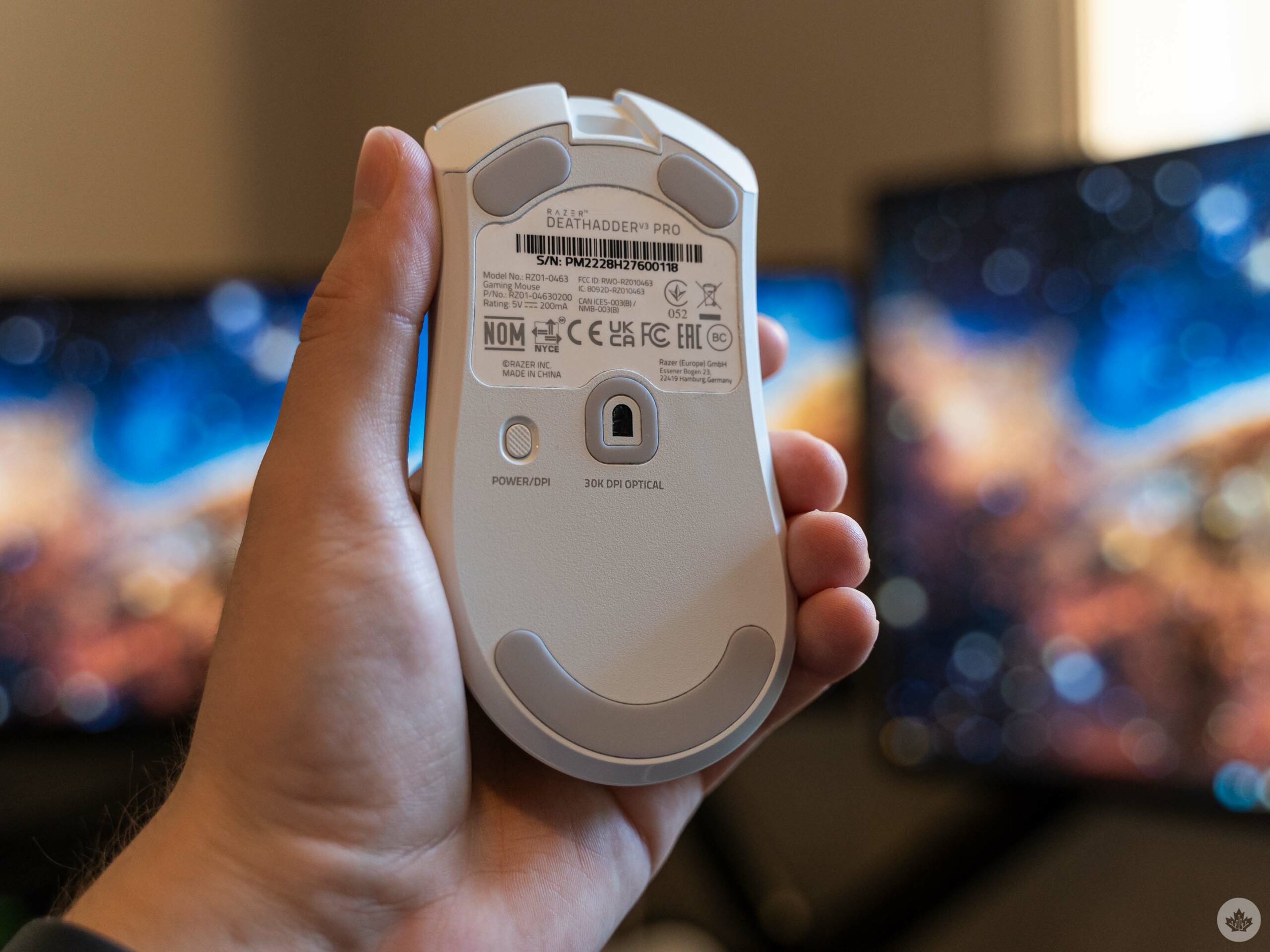
Other improvements include a ‘Focus Pro 30K optical sensor’ and wider compatibility with various desk surfaces – Razer says the sensor will track on clear glass at least 2mm thick. The sensor also features AI features such as Smart Tracking, Motion Sync and Asymmetric Cut-off. The mouse uses Razer’s Optical Mouse Switches Gen-3 for “absolutely no accidental double-clicks and no debounce delay” and is rated for 90 million clicks.
In addition, the DeathAdder V3 Pro supports a 1,000 Hz polling rate at 1 ms intervals, although those looking for extra performance can extend this to 1,000 Hz at 0.25 ms intervals (4x increase) with Razer’s HyperPolling Wireless Dongle. It’s worth noting that the dongle is a separate purchase and I haven’t had the opportunity to test it.
Gaming, not connected
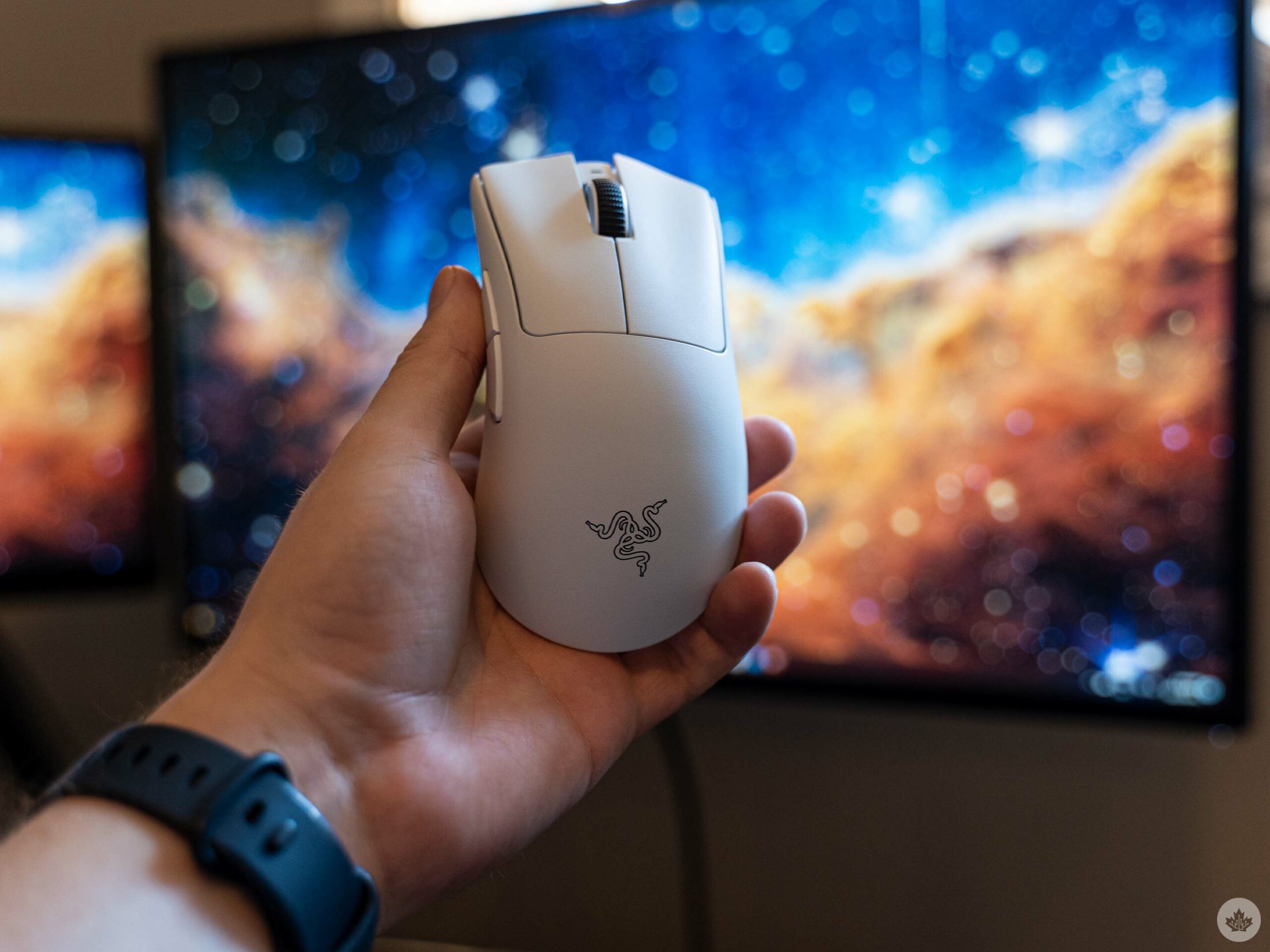
I’ve long relied on wired peripherals for my desktop because I felt there were too many downsides to wireless alternatives. My stance on that has steadily changed, and thanks to the DeathAdder V3 Pro, only my keyboard is now wired (mainly because I love my current mechanical keyboard and don’t feel like trading it for a wireless alternative until I need it).
However, my issues with wireless mice were a little different from other peripherals. For example, I’ve long avoided wireless headphones because of audio lags and other weird issues, but after testing Razer’s Kaira Pro headset, I found a wireless option that had no noticeable delays or latency, sounded great, and was comfortable to use.
With mice, I’ve never had a problem with wireless performance. My issue was weight, with previous wireless mice I’ve tried to feel heavier than wired options. Until I started testing the DeathAdder V3 Pro, I rode the Cooler Master MM720 on a daily basis, clocking in at a light 49g. I used the 68g wired Glorious Model D for that.
Although the DeathAdder is heavier than the MM720, I found it comfortable enough to use and was willing to carry some extra weight for the bonus of wireless. As an aside, I enjoyed using Razer’s 60g wireless Orochi V2 mouse, but the ergonomics made it a no-go for extended use and it has become my favorite on-the-go mouse instead.
My only other real concern was battery life and having to stop using my mouse to charge it. That’s not a problem with the DeathAdder – I’ve been using it for over a week and I only have 54 percent battery after I fully charged it when I first took it out of the box. And when the time comes when I do need to charge it, I can just plug in the cable and keep using it.
Speaking of cables…
The DeathAdder V3 Pro comes with a couple of interesting dongles that I wanted to highlight, partly because I’m stupid and didn’t use it properly.
The DeathAdder comes with a charging cable, a wireless USB-A dongle, and a weird little trapezoidal prism with a USB-C input and a USB-A input. What I found out a day later, after more troubleshooting than I’d like to admit, is that you need to plug the charging cable into your computer and then use the trapezoidal prism to connect the USB-A dongle to the USB-C cable.
Setting up the cable and dongle in this way offers two advantages. First, you can basically place the wireless dongle anywhere (within the range of the cable, of course). The second advantage is that if you need to charge the DeathAdder you already have the cable plugged in, you just need to take the trapezoidal prism off the end and plug the cable into the mouse instead.
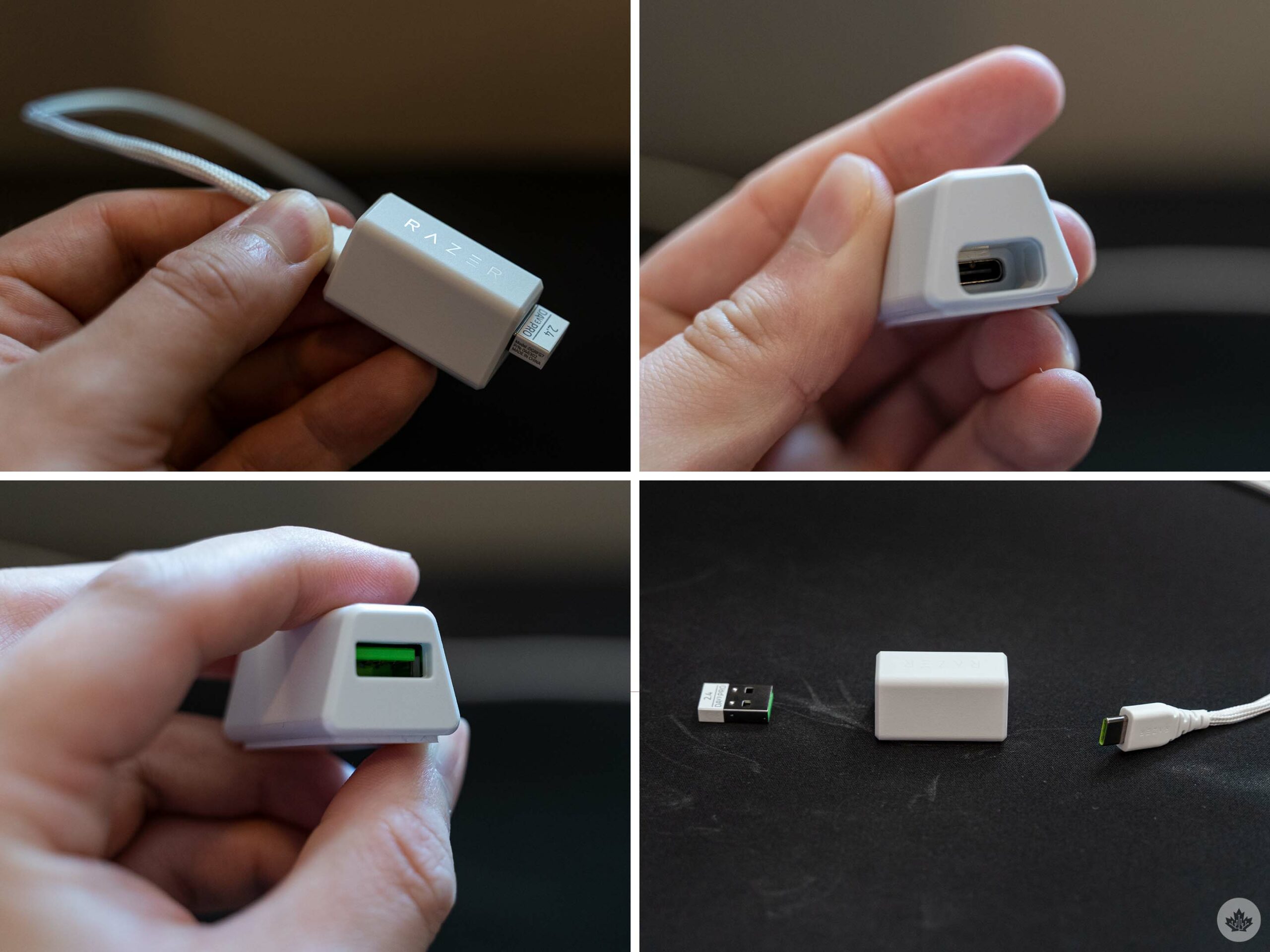
Being as smart as I am, I put the trapezoid aside, plugged the USB-A dongle into my computer, and used the power block cable to charge the mouse. Once it started up, I set up the wireless connection to my PC. The next day, however, I kept encountering strange signal issues where it seemed like the DeathAdder would lose connection to the wireless dongle for a second or so, causing my on-screen cursor to not move with my mouse.
I spent a lot of time troubleshooting the problem and have no idea what caused it. After correctly setting up the cable, trapezoid and dongle, the problem was gone. But even if I go back to using the wireless dongle connected directly to my PC it still has no signal problem. I can’t recreate it for the life of me, which makes me think it was a fluke that it happened in the first place.
Other than that one minor, brief issue, I’ve had no issues with the DeathAdder V3 Pro. Frankly, I chose to include the problem in the first place to emphasize the correct cable configuration because if I hadn’t encountered the problem, I probably would have missed its benefits.
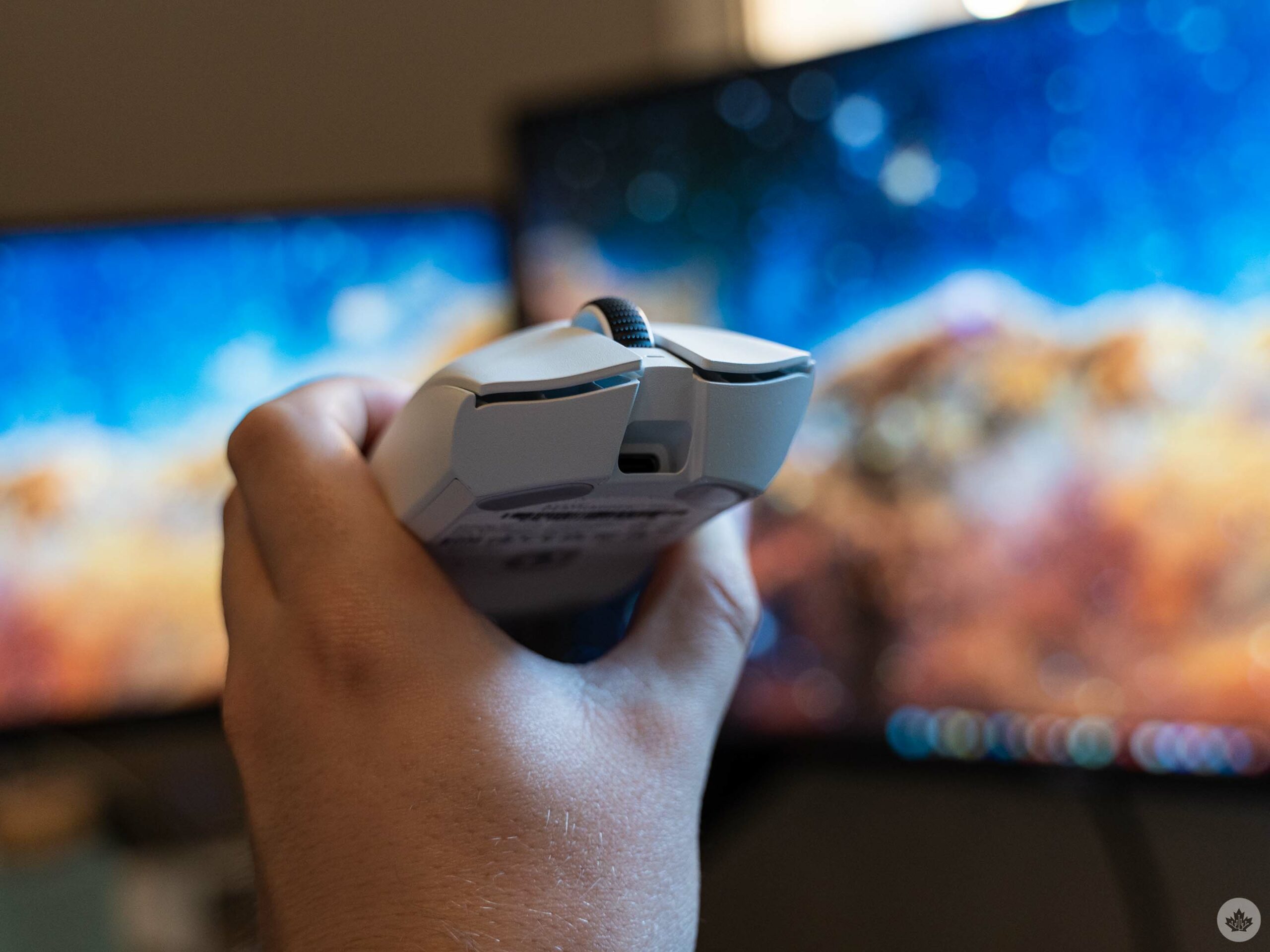
Anyway, if you’re looking for a new, comfortable wireless mouse with high performance and no flashy RGB, the DeathAdder V3 Pro is for you. It costs a pretty penny at $189.99 in Canada (plus another $39.99 if you want the HyperPolling Wireless Dongle, which I don’t think most people need).
You can learn more about and/or purchase the DeathAdder V3 Pro on Razer’s website.
0 Comments